
The table is, by definition, the soul of the living area. It is the place for shared moments, and sometimes even for study and work. Among the leading materials in contemporary furniture, glass has always held a place of honor. However, while it was once chosen almost exclusively for its visual lightness, today’s new technologies have transformed it into an extremely high-performance material, capable of competing with stone and metal in terms of durability and versatility.
In this guide, we will explore why choosing a glass-top table is a winning move, analyzing the technical advantages, different aesthetic results, and the latest generation finishes that are revolutionizing the market.
Technical advantages
Consumers are often held back by the idea that glass is fragile or dangerous. It is essential to debunk this myth by looking at the technical foundations that make modern tables true “ironclads” of design.
- Safety: High-quality tables today use tempered glass. This process involves heating the glass to extremely high temperatures (around 700°C) and then cooling it abruptly. The result is a material with mechanical resistance to impact and bending up to 4-5 times higher than standard glass. Furthermore, in the event of accidental breakage, tempered glass shatters into small, blunt, non-sharp pieces, ensuring maximum safety in homes with children.
- Hygiene and sustainability: Glass is non-porous. Unlike wood (which can absorb moisture) or marble (which is sensitive to acidic substances like lemon or vinegar), glass is completely waterproof. It does not harbor bacteria, does not stain permanently, and is extremely easy to clean. Finally, glass is 100% recyclable—potentially infinitely—making it an ethical choice for sustainable furnishing.
The aesthetics of glass: light, volume, and purity
The aesthetic impact of a glass table is unique because it alters the perception of space through light.
- The illusion of space: In modern apartments where square footage is precious, a glass table is a strategic ally. Its transparency allows the eye to pass through the object, making the table’s volume feel almost “immaterial.”
- Clear vs. Extra-clear glass: Not all transparent glass is the same.
- Float glass (standard): Has a slight greenish tint, visible mainly at the edges.
- Extra-clear glass: Thanks to a decolorization process that removes iron oxides, this glass is perfectly neutral. It is the choice for those seeking ultimate minimalism.
Back-painted glass: color as the protagonist
Back-painting (or lacquering) consists of applying a layer of special lacquer to the lower surface of the glass pane, transforming the crystal into a top with a full, vibrant color.
- Why choose it? It offers a “liquid color” depth that no other material can replicate. Since the color is sealed underneath, it is protected from scratches and UV rays, meaning a white table will stay pure white for decades without yellowing.
Ronda Design excellence: the Jupe table
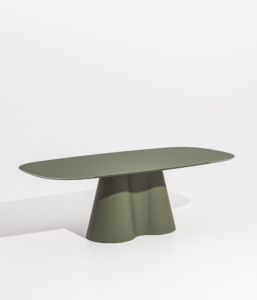
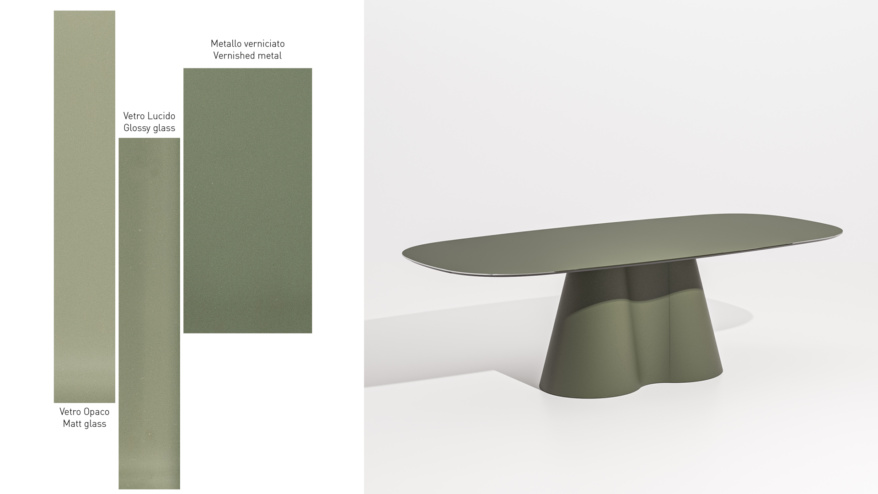
A masterly example of glass evolution is found in the Jupe table by Ronda Design. The brand interprets the glass top as an element in dialogue with the metal bases that constitute the company’s DNA. By choosing the glass in the same color as the base (such as Caffè or Canapa), the table takes on a monolithic, architectural look. Alternatively, pairing a matte top with a special metallic finish base creates sophisticated light refractions.
Glossy vs. Matte finishes
Choosing the surface finish is not just a matter of style, but also of daily maintenance.
- Glossy glass reflects light, creates depth, and makes colors pop. It is incredibly elegant, though fingerprints tend to be more visible.
- Matte glass has a “velvety” look and diffuses light more softly than its glossy counterpart. Furthermore, it is less sensitive to fingerprints and feels almost silky to the touch.
Choosing a glass-top table today means investing in an object that blends timeless elegance with innovation. Whether you prefer the purity of extra-clear transparency or the depth of back-painted glass, this material remains the ideal choice for those wishing to combine aesthetics, hygiene, and durability.
Pro tip: Before purchasing, always consider how you will use the table. If it will serve as the family’s daily workstation, opt for matte finishes. If you are looking for that “wow” effect for a formal dining area, glossy or back-painted glass is simply unrivaled.